
Living reference
Precision, in every detail.
The VectorGene design system: a restrained palette, clear hierarchy and visible regulatory context.

Palette
void
#08090B
graphite
#1D1D1B
charcoal
#2B2F33
paper
#FFFFFF
bio
#F5F6F7
silver
#D9DEE3
gold
#F4BA11
gold-dim
#D9A40A
gold-ink
#8A6C05
teal
#00787A
violet
#5B3EE8
blue
#12559A
Type and direction
Local capability.
Clear decisions begin with clear information.
Body text uses Manrope (400 body, 600 headings, 700 emphasis). Noto Sans companions cover Arabic and Simplified Chinese. Variable fonts are self-hosted.
先进医疗。本地能力。
Y học tiên tiến. Năng lực tại địa phương.
Controls and motion
Feedback 160ms · continuity 280ms · narrative 600ms. Hover and press are interruptible; reduced motion removes animation.
Fast feedback
160ms· cubic-bezier(.22,1,.36,1)
State continuity
280ms· cubic-bezier(.22,1,.36,1)
Narrative entry
600ms· cubic-bezier(.22,1,.36,1)
A surface that responds with restraint.
A small spring lift responds to pointer entry. Keyboard focus receives a visible outline. Reduced motion keeps the surface still.
Explore the surfaceVisible from the first render.
This narrative reveal translates once when observed. Its text is never hidden by opacity or a hydration dependency.
A working model, with accessible controls.
The transfer kit uses stable pointer bands and interruptible, distance-staggered transitions. It also supports keyboard and touch controls, a static server-rendered poster, print and reduced motion.
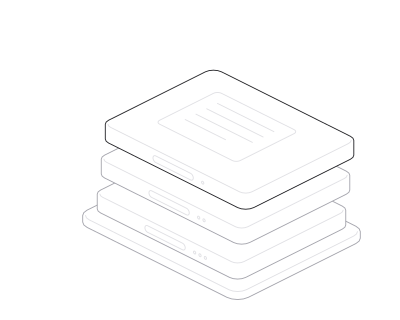
Choose a foundation to connect the illustration with the programme responsibilities below.
- Knowledge
- SOPs, batch records, QC and release testing.
- Training
- Laboratory, clinical, regulatory and quality personnel.
- Infrastructure
- Facility planning, equipment specification and GMP design.
Review question: who will own the documents, demonstrate team competence and maintain facility readiness after transfer?
Hairline illustration studies
Four official figures and two custom laboratory objects. Compare their strength, keyboard controls and static fallbacks.
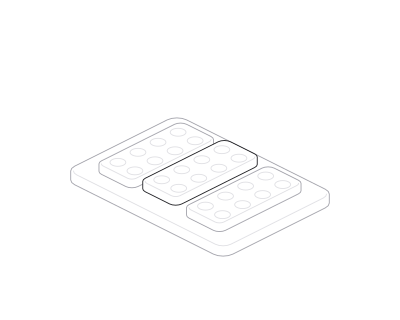
Three removable well strips illustrate three parts of a laboratory discussion. Select a topic to lift a strip and review the questions.
- Model
- Specify the tumour or tissue context, experimental endpoints and why the proposed model is appropriate.
- Materials
- Review consent, sample identifiers, access permissions and the terms for exchanging models, data and derivatives.
- Review
- Agree characterisation, reproducibility and reporting requirements, including the distinction between experimental findings and clinical decisions.
A keyboard-operated Radix tab surface on VectorGene’s own tokens.
Error: enter your institution name.
Success example: Preview complete. Nothing has been sent.
Regulatory context
Native disclosures
How long does a typical technology transfer take?
It depends on the platform and infrastructure baseline. A genomics reference laboratory can be operational in 6–12 months. A CAR-T manufacturing programme typically requires 12–24 months from MoU to first clinical use. Gene therapy programmes may take 18–36 months because of regulatory complexity. The feasibility phase clarifies realistic timelines for your specific context.
Does VectorGene handle the regulatory approvals directly?
No. Regulatory approval is the responsibility of the local partner and is conducted through the national regulatory authority of the host country. VectorGene supports the documentation, technical files, evidence packages and submission preparation — but the formal application and ownership of the regulatory dossier remain with the local institution.
Working environments
Photography and illustrative media.
Illustrative stock photography provides context for the people, processes and working environments behind this capability.
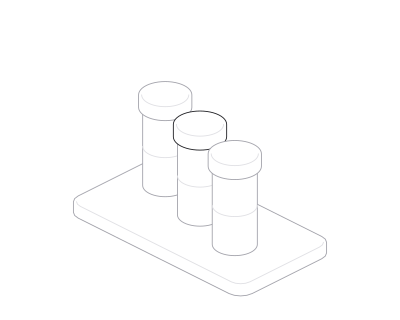
Each vial highlights one planning question. The drawing is an illustrative object.
- Sample
- The rack is an illustrative object, not a clinical protocol.
- Method
- Selection lifts a vial to connect it with its external label.
- Interpretation
- Reset returns all three vials to their rest position.


