

Capabilities to transfer
Workflows, expertise and systems designed around your local institution.
- Patient-derived organoids
- Tumour and normal tissue models.
- Drug sensitivity screening
- Ex vivo response profiling.
- Mesenchymal stem cell platforms
- Isolation, expansion and characterisation.
- Biobanking workflows
- Consent, storage and sample governance.
- Co-culture models
- Immune-tumour interaction studies.
- Publication support
- Joint research and translational output.
What does your institution need first?
Begin with your existing infrastructure, clinical governance and local regulatory pathway. Feasibility establishes the programme requirements.
Discussion preparation
Your institutional baseline
Use these prerequisites to prepare a discussion. This checklist is not a clinical assessment or a determination of regulatory readiness.
0 of 3discussion prerequisites identified.
Explore related partner services.
Read each service’s complete scope and regulatory note. These links help you explore the portfolio; programme-specific suitability requires feasibility assessment.
Build a research model with a defined purpose.
A useful model programme links the biological question to tissue access, consent, culture methods, characterisation and reproducible experiments. Set the research objective and the publication or collaboration boundary before selecting the model portfolio or laboratory infrastructure.
NCI describes patient-derived organoids and other next-generation culture models as tools for precision-oncology research. These models provide experimental context; their research role should be distinguished from a validated test directing an individual patient’s treatment.
NCI: About Next-Gen ModelsExternal references explain the wider context. They do not verify or endorse the supplied VectorGene or partner offering.
Questions for the programme brief
Which question and model?
Specify the tumour or tissue context, experimental endpoints and why the proposed model is appropriate.
How will materials be governed?
Review consent, sample identifiers, access permissions and the terms for exchanging models, data and derivatives.
How will results be assessed?
Agree characterisation, reproducibility and reporting requirements, including the distinction between experimental findings and clinical decisions.
What to prepare for review
- Research protocol and tissue-access plan
- Model characterisation requirements
- Material, data and publication agreement questions
Working environments
Culture and microscopy, in context.
Illustrative stock photography provides context for the people, processes and working environments behind this capability.
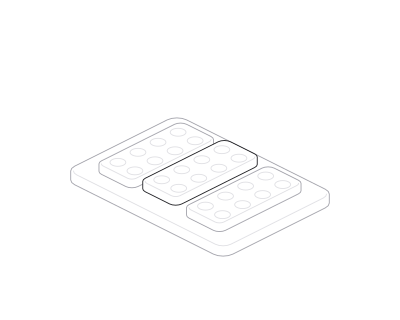
Three removable well strips illustrate three parts of a laboratory discussion. Select a topic to lift a strip and review the questions.
- Model
- Specify the tumour or tissue context, experimental endpoints and why the proposed model is appropriate.
- Materials
- Review consent, sample identifiers, access permissions and the terms for exchanging models, data and derivatives.
- Review
- Agree characterisation, reproducibility and reporting requirements, including the distinction between experimental findings and clinical decisions.


