

Capabilities to transfer
Workflows, expertise and systems designed around your local institution.
- GMP facility planning
- Cleanroom layout, classification and equipment specification.
- CAR-T workflow transfer
- Multi-target platforms: CD19, CD20, CD22, BCMA, CD7, GPRC5D, BAFF-R.
- SOP & batch records
- Full documentation set with local adaptation.
- QC & release testing
- Specification setting and release criteria.
- Vector / plasmid strategy
- Supply, qualification and contingency planning.
- Staff training
- Laboratory, clinical, regulatory and quality personnel.
- Clinical protocol support
- Trial design and ethics submission preparation.
- CRS / ICANS management
- Clinical governance and adverse event frameworks.
What does your institution need first?
Begin with your existing infrastructure, clinical governance and local regulatory pathway. Feasibility establishes the programme requirements.
Discussion preparation
Your institutional baseline
Use these prerequisites to prepare a discussion. This checklist is not a clinical assessment or a determination of regulatory readiness.
0 of 4discussion prerequisites identified.
Partner-reported portfolio
CAR-T target explorer
Seven single-antigen and four dual-antigen constructs. Explore the portfolio as a starting point for technical discussion.
Single-antigen constructs
Dual-antigen constructs
Single-antigen constructs
Dual-antigen constructs
Partner-reported construct portfolio. Target selection does not establish clinical suitability, regulatory approval or efficacy. Availability and local requirements are assessed during feasibility.
Partner-reported · generalised proposal
Typical engagement
Indicative engagement only. The actual programme depends on feasibility, local infrastructure and the host country regulatory framework.
Knowledge transfer
2–3 technical personnel deployed on-site · hands-on training for 8–10 local staff · ongoing remote and in-person support · structured knowledge-transfer programme.
Facility
~1,000+ m² GMP laboratory (Grade B/A), emergency power, CO₂ incubators & bioreactors, biosafety cabinets, automated transfection, ultracentrifuges & purification, flow cytometry, PCR & QC.
Clinical
a transplant ward or laminar-flow ward led by the local clinical team under specialist guidance; pre-clinical studies (including animal studies) per local policy; approvals coordinated with local regulators.
Working environments
A working cell-manufacturing environment.
Illustrative stock photography provides context for the people, processes and working environments behind this capability.
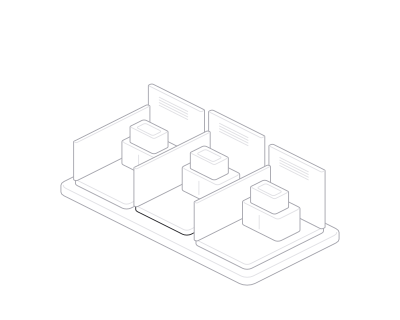
Explore three cutaway laboratory rooms with workbenches and air-handling panels. This is an illustrative object, not a facility specification.
- Scope
- Establish the proposed cell source, construct, indication, development stage and access rights before defining the transfer scope.
- Handover
- Review collection, identity records, manufacturing scheduling, release responsibilities and arrangements when a batch cannot proceed.
- Oversight
- Name manufacturing, quality and clinical owners, including the team responsible for safety reporting and follow-up planning.


