
CHGB · Partner-reported service scope
Immune Cell Subpopulation Analysis
Precise assessment of over 75 immune cell subpopulations across T cells, NK cells, gamma delta T cells and B cells for immune function evaluation and disease risk assessment.
- Partner-reported scope
- 75+ items
- Method
- Flow cytometry

CHGB · Partner-reported
Service capabilities
The following scope is reported by the partner. Quantities describe the partner portfolio and do not represent VectorGene’s own track record.
- T cell deep profiling
- Helper, killer, regulatory; naive, effector memory and terminally differentiated CD4+ subsets.
- NK cell functional analysis
- Early/late blocked, virus-specific cytotoxic and activated NK cells.
- Gamma delta T and B cells
- Immune health scoring
Make the panel and interpretation scope explicit.
An immune-cell analysis programme should define which populations are measured and why. Collection conditions, method controls and report interpretation belong in the same brief. Agree whether the result is intended for research, longitudinal monitoring or a defined clinical investigation before designing the workflow.
WHO’s laboratory quality handbook addresses management, administration and bench work together. It provides a foundation for organising a laboratory’s quality system; current accreditation requirements need to be checked separately.
WHO: Laboratory quality management system: handbookExternal references explain the wider context. They do not verify or endorse the supplied VectorGene or partner offering.
Questions for the programme brief
Which populations and purpose?
Request the proposed marker panel, analysis rules and intended research or clinical question.
Which operating conditions?
Review collection, stability, sample acceptance, instrument controls and the validation boundary.
How will results be contextualised?
Confirm the reporting units, reference intervals or comparator, reviewer and the limits of the proposed interpretation.
What to prepare for review
- Panel and intended-use brief
- Collection and quality-control requirements
- Example report and interpretation framework
Working environments
Sample preparation and analysis settings.
Illustrative stock photography provides context for the people, processes and working environments behind this capability.
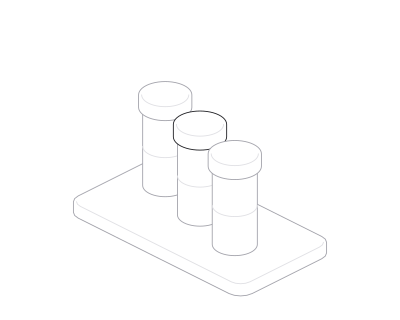
Each vial highlights one planning question. The drawing is an illustrative object.
- Sample
- What collection, stability and acceptance conditions apply?
- Method
- Which marker panel and analysis rules are agreed?
- Interpretation
- What reference intervals and interpretation process apply?


