
CHGB · Partner-reported service scope
Cancer Organoid Drug Screening
Patient-derived organ models across seven cancer types with screening against more than a hundred targeted drugs.
- Partner-reported scope
- 100+ targeted drugs
- Method
- Patient-derived organoids

CHGB · Partner-reported
Service capabilities
The following scope is reported by the partner. Quantities describe the partner portfolio and do not represent VectorGene’s own track record.
- Renal cancer
- Liver cancer
- Lung cancer
- Colorectal cancer
- Gastric cancer
- Breast cancer
- Oesophageal cancer
Explore services in this category.
Read each service’s complete scope and regulatory note. These links help you explore the portfolio; programme-specific suitability requires feasibility assessment.
Define the experiment and its clinical boundary.
An organoid drug-screening brief should specify the tissue, model characteristics, drug panel and experimental endpoint. If results are proposed for a clinical decision, request evidence for that exact use separately from the evidence supporting organoids as a research method.
NCI describes patient-derived organoids and other next-generation culture models as tools for precision-oncology research. These models provide experimental context; their research role should be distinguished from a validated test directing an individual patient’s treatment.
NCI: About Next-Gen ModelsExternal references explain the wider context. They do not verify or endorse the supplied VectorGene or partner offering.
Questions for the programme brief
What does the experiment test?
Agree the model, agents, controls, endpoints and reporting timeframe needed for the research question.
How is the model characterised?
Request tissue provenance, consent, culture-success criteria and the quality records for the resulting model.
How may results be used?
Define the research reporting boundary and any additional validation and governance required for clinical interpretation.
What to prepare for review
- Research protocol and drug-panel brief
- Model characterisation and consent requirements
- Reporting and proposed-use evidence
Working environments
Culture preparation and laboratory tools.
Illustrative stock photography provides context for the people, processes and working environments behind this capability.
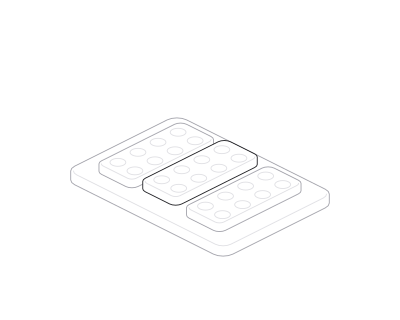
Three removable well strips illustrate three parts of a laboratory discussion. Select a topic to lift a strip and review the questions.
- Experiment
- Agree the model, agents, controls, endpoints and reporting timeframe needed for the research question.
- Provenance
- Request tissue provenance, consent, culture-success criteria and the quality records for the resulting model.
- Use
- Define the research reporting boundary and any additional validation and governance required for clinical interpretation.


